Top 10 super strong animals

TEN SUPER-STRONG ANIMALS


10 brown bear (ursus arctos)

five times as strong as a human Grizzly bears grow to 500kg and over, and prey on large mammals such as moose, elk and even black bears.

09 green anaconda (eunectes murinus)

               
constricts at 90psi though figures are debated, the green anaconda is believed to be the world’s largest snake, and has the most powerful squeeze at a reported 90psi.

08 Ox (Bos primigenius)

Pulls 150% of own weight the phrase ‘strong as an ox’ is well coined: for millennia oxen have been used for hauling heavy loads and ploughing heavy soil.

07 Asian elephant (elephas maximus)

Pulls 170% of own weight But Asian elephants used in the timber industry have hauled logs weighing up to 9 tonnes – nearly twice as heavy as a large male tusker.

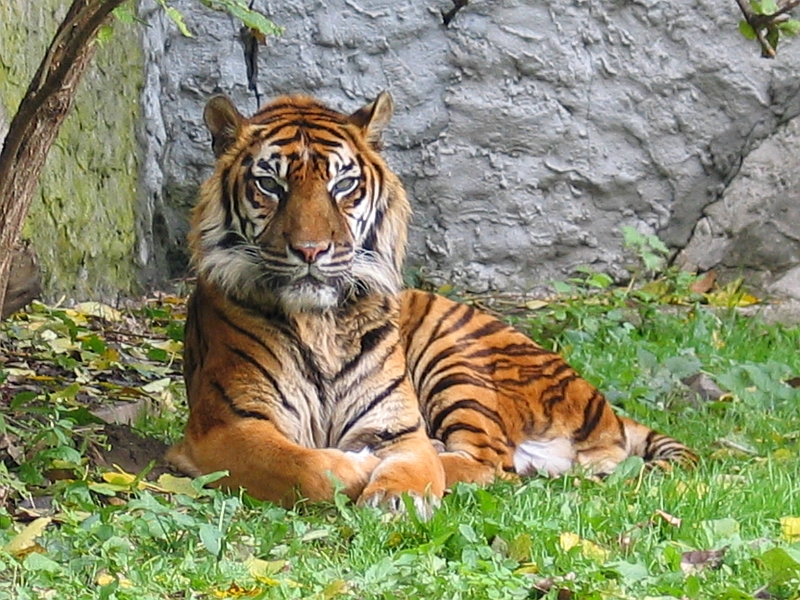
06 Tiger (Panthera tigris)

lifts double own weight Prey varies across the ranges of the subspecies, but the largest tigers have been known to hunt and carry water buffalo and even young elephants.

05 Crowned hawk-eagle (Stephanoaetus coronatus)

lifts four times own weight one of Africa’s most powerful raptors, the crowned hawk-eagle preys on mammals such as monkeys and bushbucks that weigh up to 30kg.

04 eastern gorilla (Gorilla beringei)

lifts 10 times own weight Big male gorillas – silverbacks – are immensely strong. By comparison, the strongest human weightlifters can lift two or three times their own weight.

03 Leaf-cutter ants (Atta cephalotes)

lifts 50 times its own weight the various species of leafcutter ant carry relatively enormous chunks of leaves back to their nest to fertilise the fungi on which they feed.

02 hercules beetle (Dynastes hercules)

 lifts 850 times own weight the hefty insects known as rhinoceros beetles carry huge loads – anecdotal evidence suggests this species can lug 850 times its own weight.

01 dung beetle (Onthophagus taurus) 

Hauls 1141 times own weight in 2010, researchers rob Knell and leigh simmons demonstrated that the strongest males can pull a load 1,141 times its own weight.


Comments

Popular posts from this blog

Why do different countries use different mains voltages?

Why do different countries use different mains voltages? the biggest disparity is between the usA on 110V and most of the rest of the world on 230V. America’s lower voltage goes all the way back to thomas edison, who introduced direct current (dC) mains electricity at 110V. edison’s rival nikola tesla showed that long power lines transmitted alternating current (AC) more efficiently than dC. His AC approach won out, but he stuck with edison’s 110V. But by the time electrification spread to europe early in the 20th Century, lamps had filaments that could give out more light and handle greater power loads. so the Berliner elektrizitätswerke company in Germany established 230V as the standard. 

Ten most dangerous animals in the world.

10 DANGEROUS ANIMALS 10 Poison dart frog (phyllobates terribilis)  Human deaths/year: Unknown living in the rainforest of colombia, this frog’s skin is coated with enough batrachotoxins to kill at least ten men. 09 Box jellyfish (Chironex fleckeri) human deaths: at least 60 since 1883 each of the sea wasp’s tentacles is armed with about 5000 stinging cells. 08 sloth bear (Melursus ursinus)  Human deaths/year: <2 like other bear species, sloth bears don’t predate humans, but chance encounters can result in deaths. 07 Great white shark (carcharodon carcharias)  Human deaths/year: <30 unprovoked shark attacks on humans are extremely rare – and fatalities even rarer. Great white, tiger and bull sharks are responsible for most. 06 lion (panthera leo) Human deaths/year: ≤100 lion attacks on humans often occur during harvests, but rare outbreaks of mass ‘maneating’ also occur. 05 African elephant (Loxodonta africana)  Human deaths...

Do video games change the brain?

Do video games affect behaviour? Video games are likely able to affect the way we behave in a number of ways. For instance, there’s concern about whether violence in games makes young people more violent. It’s not uncommon for news outlets to blame games every time a crime happens, but how true is that claim? This is controversial even within the scientific community. Yes, exposure to violence seems to affect the brain, but studies have also found that we’re good at distinguishing between real and virtual violence, and aggressive behaviour is better explained by other, mainly socio-economic factors. Numerous studies about the effects of games on the brain had been published, but all that information had not been put together until now. How did you review the research?  We gathered all scientific articles to date and compared results. In total, we found 116 experiments, the first from the 1980s. Many compared regular video game players with people who had never played; other...